introduction: in the digital era, computer room location and redundancy strategies directly affect business continuity and service availability. regarding the layout of managed server rooms in the united states, this article explains how to reduce interruption risks, improve recovery capabilities, and meet compliance and performance requirements from the perspective of site selection, redundancy design, and operation and maintenance.
site selection requires a comprehensive assessment of geology, climate, transportation and power supply stability. select areas affected by low-risk earthquakes, floods, and hurricanes, while taking into account geographic proximity to major users or backbone networks to reduce latency and facilitate on-site operations and emergency response.
multi-region layouts and cross-az replication are common practices in us hosting server architecture. by implementing geographical redundancy and off-site data backup, business interruption caused by single points of failure can be avoided and disaster recovery time and recovery point objectives (rto/rpo) can be met.
the power system should adopt multi-channel power supply and redundancy levels such as ups/n+1, 2n, etc. the cooling system needs backup cold source and fluid circulation redundancy. regularly rehearse the switching process and capacity assessment to ensure that the environment and load are stable when the primary device fails.
multi-operator links, different optical cable routing and bgp multi-path strategies can significantly improve network availability. the layout of the us managed server room should consider low-latency interconnection, bandwidth scalability and ddos protection to ensure continuous connectivity and stable performance.

computer rooms need to meet physical security standards such as access control, video surveillance, and environmental monitoring, and comply with industry and regional compliance requirements (such as privacy and data sovereignty). compliance assessments should influence site selection and redundancy strategy design to avoid legal and audit risks.
proper computer room layout and redundancy strategies can minimize the impact of faults and improve business availability and disaster recovery capabilities. in the us market, layout decisions that take into account regional differences and regulatory environments are directly related to user experience, contract sla and cost-benefit balance.
it is recommended to formulate computer room location and redundancy strategies based on risk assessment: combine multi-region deployment, power and network redundancy, physical security and compliance management, and optimize the design through regular drills and monitoring. this can effectively ensure business continuity and long-term stability in the layout of the us hosting server room.
- Latest articles
- Practical Guide And Advice On Choosing The Most Stable PUBG Server In South Korea
- How Does Cross-border Business Use Cloud Servers? Singapore Servers Improve Access Experience
- How To Enter The Vietnam Server Now? A List Of Graphic Steps And Common Misunderstandings That Even Beginners Can Understand.
- How Does An Enterprise Choose A Hosting Plan That Supports Multiple IPs For US Site Group Servers?
- Looking At The Stability And Compliance Requirements Of Cross-border Transactions From The Futian Hong Kong Station Group Server
- Evaluate The Compliance Certificate And Protection Capabilities Of US Cloud Rental Servers From A Security Perspective
- Purchasing Advice Hong Kong Vps Cloud Server 8 Core How To Choose The Appropriate Package According To Business Load
- Comparative Analysis Of Computer Room Distribution And Network Interconnection Performance Of Server Companies In Taiwan
- Cost Control Billing Model And Money-saving Tips For Taiwan’s Native IP Server Cloud Server
- Cost And Operation And Maintenance Perspective Differences Between Hong Kong Cn2 And BGP Comparison Of Procurement And Maintenance Costs
- Popular tags
-

Notes On Purchasing US Servers Using Hong Kong Apple ID
This article details the precautions for purchasing US servers using Hong Kong Apple ID to help users avoid common problems during the purchase process. -

American High Defense Server Q&A Answer Your Concerns
This article will answer common concerns about US high defense servers, helping you better understand the advantages and selection criteria of high defense servers. -
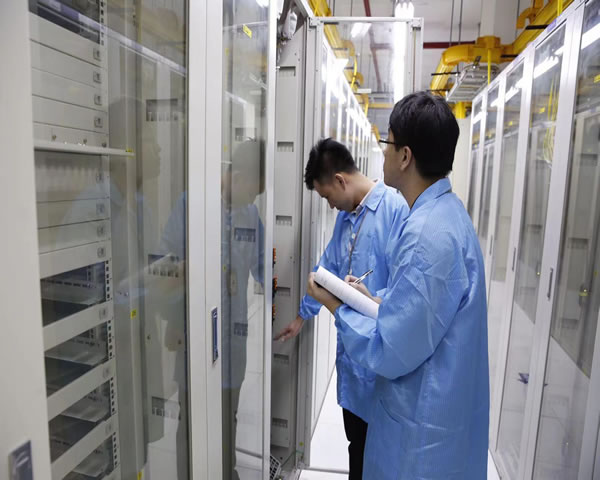
The Key Points Of Post-lease Operation And Maintenance Of The Us Site Group Include Backup Strategy Monitoring And Exception Handling Solutions
this article focuses on the key points of post-lease operation and maintenance of the us site cluster, and systematically introduces practical suggestions such as backup strategies, monitoring systems, anomaly detection and handling, recovery drills, and log compliance to help improve availability and risk resistance.